Macbeth
Critique • Quotes • At the movies
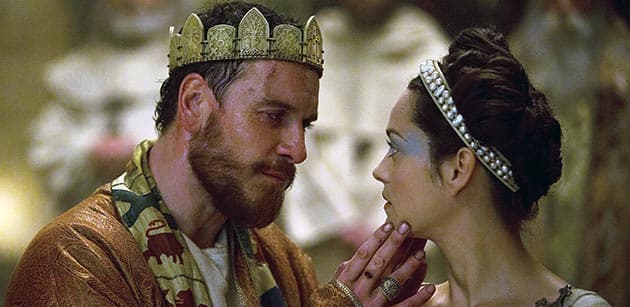
An intimate moment between Macbeth (Michael Fassbender) and Lady Macbeth (Marion Cotillard).
Epic Macbeth
Macbeth (2015): film, 113 minutes; director Justin Kurzel; writers Todd Louiso, Jacob Koskoff, Michael Lesslie; featuring Michael Fassbender, Marion Cotillard, Paddy Considine, Sean Harris, Jack Reynor
Watching the 2015 adaptation of Macbeth may be the closest we'll get to a truly cinematic experience of the notoriously difficult play. This is a version of Macbeth that fills the wide screen with clashing armies, quasi-mythological vistas, blood-read skies, and brutal Scottish landscapes dwarfing their inhabitants.
And yet this adaptation is equally adept at closing in for its intimate moments, especially between the Macbeths.
It is also unafraid to build on the personal dramas to reveal depths Shakespeare only hints at. The first and most blatant example is having the couple grieve the death of their young child. In the stage play Lady Macbeth only ever mentions "I have given suck" to suggest she once had a infant. Not only does the film start with the Macbeths suffering through a funeral, but the theme continues throughout as haunting imagery of children recur throughout, implying their loss is part of what drives the tragic couple.
The film really gets going in its first chaotic battle as a bloodied Macbeth fights for current King Duncan and wins a great victory at the cost of the lives of boy soldiers (children again). The fighting is depicted in vicious detail rather than just the being reported to the court as is usual. After the battle Macbeth and fellow general Banquo cross the heath to visit the weird sisters, portrayed as very human and dour witches (one of them carrying a baby) rather than the cackling supernatural beings of the play. Along the way the camera sweeps across realistic scenes of the medieval countryside and the primitive lives of the people in their huts.
It is well into the film before Macbeth and company return home and we see the lives of the nobility in their spacious castles and cathedrals. And we return to the familiar story of the two Macbeths and their murderous ambitions.
Trailer for 2015's epic retelling of Shakespeare's Macbeth.
But we now see the pair differently than in a conventionally staged presentation.
Irish actor Michael Fassbender (Jane Eyre) and French actor Marion Cotillard, who would go on to star together again under the direction of Justin Kurzel, show great chemistry as the leads. Their Macbeths are emotionally repressive, never bombastic but quivering from their attempt to hide the guilt-driven agonies destroying them from within. This Lady Macbeth is less the ambitious manipulator of her husband found in other Macbeths and more a sharer in his misery. They're still the twisted authors of terrible crimes, deserving of tragic ends, but victims of fate as much as those who fall prey to them.
The price to be paid for this different interpretation is a lessened effect of some of the play's most dramatic scenes. "Is this a dagger which I see before me" and other iconic lines slip by without fanfare, as just expressing the ongoing decline of these two miserable humans.
This Macbeth is not an adaptation to help you understand what makes one of William Shakespeare's tragedies so great. Just as Shakespeare reimagined old stories, changing details and themes at will, to suit the Elizabethan stage, so can a brilliant team of writers, director, cinematographer and actors reshape Shakespeare's old play to enthrall modern cinema.
— Eric
