The Witness for the Prosecution
Critique • Quotes • At the movies
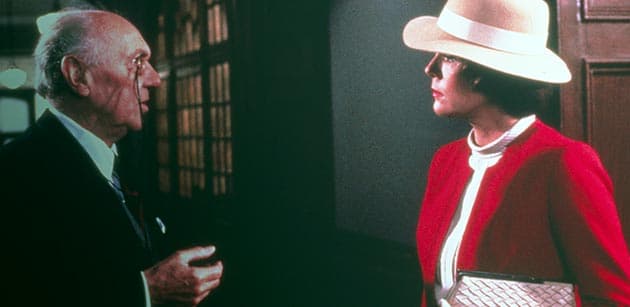
Sir Wilfrid (Ralph Richardson) is confronted by Christine (Diana Rigg) in the television movie.
Remaking a murderous classic
Witness for the Prosecution (1982): Television film, 142 minutes; director Alan Gibson; writer John Gay; featuring Ralph Richardson, Diana Rigg, Beau Bridges, Deborah Kerr, Donald Pleasence, Wendy Hiller
What do you call a television remake of a film adaptation of a stage adaptation of a short story?
The onscreen writing credits for 1982's Witness for the Prosecution show its convoluted history: "Based on a screenplay by Billy Wilder and Harry Kurnitz", "Adaptation by Larry Marcus", "Based on a play by Agatha Christie", and "Written for television by John Gay". That's American television.
The evidence of Gay's writing is mainly in the scenes of the housekeeper discovering the body, which run under the opening credits for the first time, and the scenes introducing a crochety Sir Wilfrid Robarts being released from hospital and returning to work at an applauding law office.
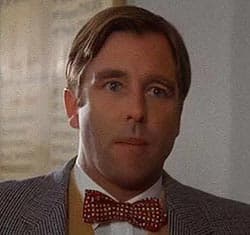
Beau Bridges as Leonard Vole.
After this, Gay's script follows that of the 1957 Billy Wilder film closely. Very closely. Most of the television movie repeats the earlier film's narrative and character beats, not to mention its dialogue and shots.
The two main differences are: the remake is in colour and it features different actors. Neither points count as improvements. The colour is not particularly striking as the atmospheric black and white had been. And the actors can't match, let alone surpass, the work of the legendary cast in the original film.
But they are pretty good. British theatre great Ralph Richardson in his old age is interesting casting. He adds a more caustic tone to the ailing barrister. Half the time he appears a little lost and it's hard to tell if that's brilliant acting as Sir Wilfrid or it's just Sir Ralph struggling to cope with his last leading role. In either case, he's wickedly delightful.
English actor Diana Rigg was praised for her work as Christine, the "witness" of the title, though she may be just too likably attractive to thrill as the woman we're supposed to love to hate.
The 1982 television remake of Witness for the Prosecution.
The actor who suffers most from comparisons with the earlier film is Beau Bridges. The American actor—the only one in the cast—is competent and convincing as ever, but he comes across as bland. You may argue this works in the role of Leonard Vole, presenting a deceptively placid demeanour hiding darker depths. But we miss an older-fashioned actor's histrionics.
In her first American television movie, British actor Deborah Kerr, former star of stage and film, revived her career with the role of Miss Plimsoll, though it is toned down from the Elsa Lanchester turn in the 1957 film.
So much for the comparisons with the television movie's cinematic model. How does it stack up on its own merits?
Very well actually. Superior televison in the 1980s. It makes for an enjoyable couple of hours for both Agatha Christie fans and classic drama devotees.
— Eric
