Case Histories
Critique • Quotes
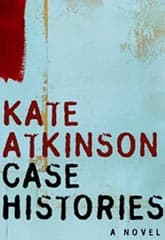 First edition, 2004
About the book
Author
Kate Atkinson, England
First publication
2004 in England
Form
Novel
Genre
Crime, mystery, detective
Writing language
English
Length
Approx. 108,000 words
All too human a detective
When an author known for literary prose takes up mystery writing, you might expect a shift in tone. An easier-going superficiality, a dumbing down, as if they're slumming. A bowing to the sensationalist tropes and comforting clichés of the newly adopted genre.
But Case Histories, Kate Atkinson's fourth novel and her first featuring private investigator Jackson Brodie, opens like many a great British literary work. Three chapters introduce the engaging stories of three families with nary a nod to crime or violence of any type until the dying passages of each section. Seventy pages pass before Brodie, or any other detective, is even introduced.
And the appealing Jackson brings with him a fourth familial drama.
Many crime stories are known for their eccentrically fashioned lead characters but Case Histories is truly a character-driven work of fiction all the way through.
Don't get me wrong. It's a terrific read for crime and mystery fans. The crime and mystery elements are craftily embedded in the human stories and together they drive you through the successive chapters. In a review excerpted in my copy of Case Histories, Stephen King describes the book's structure like this:
There are actually four mysteries, nesting like Russian dolls, and when they begin to fit together, I defy any reader not to feel a combination of delight and amazement[....] I read it once for pleasure and then again just to see how it was done.
To tell the truth though, I could do with a little less of the overlapping plot lines.
Managed chaos
Time-shifting and jumping back and forth among interlocking dramas are part of Atkinson's style in both her literary and genre writing. It can be off-putting at times. You just think you're getting somewhere important with one of the storylines when you're thrust back into the earlier stages of another storyline you've half-forgotten.
But this fragmentary—often chaotic—approach has become an established part of modern literature that readers have come to accept. And it has to be admitted Atkinson handles it more clearly than most, so you seldom feel lost. Her writing is always engaging. Very proper English, but with giggle-out-loud wit and surprising moments of vulgarity to undercut the priggishness that afflicts much British crime writing. Its melancholic atmosphere and a deterministic chains of cause and effect, inevitably driving the characters together and apart, are also distinctive in her work.
As a mystery, or rather a collection of mysteries, Case Histories succeeds on its own terms. Mysteries are resolved but always with some hint of ambiguity, as if Atkinson is trying to avoid too neat a wrapping up, distancing her detective from those classic all-seeing sleuths basking in revelation and adulation at each case's resolution.
Jackson's detective is far from those crime and mystery clichés but, imperfect as they are, his resolutions are more satisfying than most in myriad human ways.
— Eric
Critique • Quotes
